
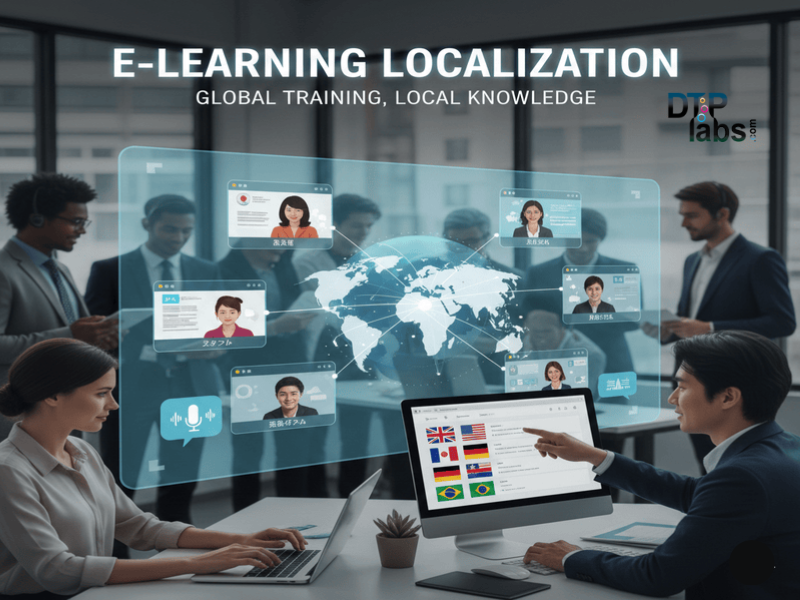
Smarter E-Learning Localization: The Power of Emerging Technologies
In today’s globally connected world, e-learning localization has emerged as a vital strategy for organizations aiming to deliver culturally relevant, linguistically accurate, and engaging training content to diverse international audiences. Gone are the days when mere translation was enough. Now, organizations leverage cutting-edge e-learning localization tools and techniques to create immersive and effective training experiences.
This blog explores how technology, particularly AI in e-learning localization, is transforming the landscape. We’ll break down best practices, showcase real-world case studies, and highlight tools that instructional designers, e-learning developers, and corporate training managers should know.
What is E-Learning Localization?
E-learning localization is the process of adapting digital learning content not just by translating it into different languages, but by tailoring it to align with the cultural, linguistic, and technical needs of the target audience. This includes everything from visuals, colors, and units of measure to idiomatic expressions and regulatory compliance.
“Localization is not just a linguistic task; it’s a design and UX strategy rooted in cultural empathy.”
E-learning localization: How to internationalize your content
Embracing e-learning localization isn’t just a smart move; it’s an absolute game-changer. This dynamic process is your ticket to mastering global audiences effectively. Picture it as your trusty bridge, seamlessly connecting diverse cultures and languages. You might think it’s time-consuming, but skipping localization is a strategic blunder. It can cause your engagement rates to tank. Let’s dive in.
Why is e-learning localization important?
Don’t underestimate the impact of localizing your e-learning content. Let’s explore why it’s an absolute must.
Achieving genuine learner engagement
Tailoring learning materials for local audiences enhances personal connections with learners. This engagement fosters a deeper understanding of the subject matter and a higher level of motivation to complete the courses.
Avoiding cultural misunderstandings and barriers
Localizing e-learning content ensures that it is culturally sensitive and avoids potential pitfalls. Organizations can avoid misunderstandings that could impede effective learning by recognizing and honoring cultural references and nuances.
Building trust and authenticity with global learners
Developing content in the language of your students promotes inclusivity, respect, and trust. This approach lays the foundation for a truly engaging and effective learning environment. Localization goes beyond language and adds authenticity through imagery. For example, personalizing the content of a driver safety course by modifying the images to reflect regional driving customs.
Exploring Localization in eLearning
Customizing e-learning materials to be linguistically and culturally suitable for students in various locations is known as localization. It’s not just about translating text; it also involves modifying images, videos, instructional strategies, and even the tone of voice to meet the cultural expectations and learning style of the target audience.

Why is eLearning Localization so Important?
eLearning localization is essential for several reasons:
- Cultural Relevance: Every culture has unique norms, values, and sensitivities. Localizing eLearning content ensures that it resonates with learners from a particular region, making the material more relatable and engaging.
- Language Accessibility: Not all learners share the same language proficiency. By localizing content in learners’ native languages, eLearning becomes more accessible and understandable, leading to better comprehension and retention.
- Contextual Adaptation: Localizing eLearning content involves adjusting examples, references, and scenarios to make them relevant to the target audience. This customization enhances the learning experience, making it more meaningful and applicable to real-life situations.
- Compliance and Legal Requirements: In some regions, educational content must adhere to legal or regulatory standards. Localization guarantees compliance, assisting businesses in avoiding legal problems while providing efficient training.
- Global Reach: By localizing eLearning content, organizations can tap into diverse markets, expanding their reach and catering to learners from different geographical locations. This global accessibility promotes inclusivity and opens new opportunities for growth.
Key advantages of e-learning content localization
Although localization might seem like an extra step, it frequently pays off in the long run. Every market won’t require you to create a brand-new course from scratch. Rather, you will modify or alter the “master course,” and the following are the advantages you will experience:
You save costs on training
Every time you enter a new market, localizing is typically less expensive and simpler than creating new courses. You can modify your content more effectively and ultimately save money with a well-thought-out e-learning localization strategy.
Your students comprehend and remember the material more effectively
People learn better when the material feels familiar. Learners can immediately relate to the material if you localize not just the language but also the cultural allusions, illustrations, and examples.
For example, a sales scenario with common shopping habits and local currency has greater meaning than one with foreign references.
Deeper comprehension, improved retention, and increased completion rates result from this.
You create a more inclusive learning culture
Respecting learners’ cultures is demonstrated by speaking in their native tongues both literally and culturally. As a result, everyone feels valued and included.Students approach the material with optimism as a result. They are more likely to engage, participate, and offer feedback, all of which enhance the learning community within your company.
DTP Labs is a desktop publishing company based in New Delhi, India. We offer book publishing Services, PDF to Word conversions, post-translation DTP, and e-Learning localization services to translation agencies worldwide. To avail of our services, check out our website www.dtplabs.com, or contact us at info@dtplabs.com.